

For decades, the event catering industry operated under a fairly rigid and predictable operational playbook. The primary objective was sheer logistical efficiency—calculating the exact mathematics required to feed hundreds of guests simultaneously while keeping the primary protein warm and the vegetables presentable. The food, while necessary, was frequently viewed as a secondary component to the venue, the keynote speaker, or the floral arrangements. Today, that traditional hierarchy has been completely inverted. In the modern hospitality landscape, the culinary program is no longer just a logistical requirement; it is the absolute focal point of the event.
Modern consumers are highly educated about global cuisine, sustainability, and aesthetic presentation. They view dining not merely as sustenance, but as a primary form of entertainment and cultural connection. To meet these elevated expectations, premier catering companies and event designers have completely discarded the antiquated model of rubbery chicken and lukewarm chafing dishes. Instead, they are pioneering a new era of culinary hospitality characterized by interactive theater, radical inclusivity, and hyper-local sourcing. Understanding these essential catering trends is absolutely critical for anyone looking to curate an unforgettable, high-impact modern event.
The Era of Dietary Parity and Radical Inclusivity
In the past, accommodating dietary restrictions was treated as a logistical nuisance. A guest who requested a vegan, gluten-free, or dairy-free meal was often relegated to a hastily prepared plate of steamed vegetables or a generic pasta dish, leaving them feeling ostracized and undervalued. In the modern event space, that approach is recognized as a profound failure of hospitality.
The most significant trend in modern catering is the establishment of dietary parity. This means that a plant-based or allergen-free dish must be constructed with the exact same level of culinary ambition, complexity, and visual appeal as the primary meat or seafood offering. Elite caterers are designing overarching menus where the vegetarian option is not an afterthought, but a masterclass in flavor architecture. Think intricately layered wild mushroom mille-feuille, roasted cauliflower steaks with complex romesco sauces, and decadent cashew-cream desserts.
This trend extends far beyond veganism. Catering programs now seamlessly integrate menus that are entirely free of gluten or refined sugars without advertising them as restrictive. By establishing a baseline of radical culinary inclusivity, hosts ensure that every single guest, regardless of their dietary requirements, receives the exact same premium hospitality experience.
Culinary Theater and the Death of the Static Buffet
The traditional linear buffet is rapidly disappearing from high-end events. Logistically, buffets create massive traffic bottlenecks, force guests to stand in unappealing lines, and result in food sitting over sterno fuel, rapidly degrading in quality. More importantly, they completely kill the energetic flow of a room.
To replace the buffet, the industry has embraced interactive culinary stations. Instead of walking down a line holding a plate, guests approach micro-environments scattered strategically throughout the venue. These stations remove the barrier between the kitchen and the dining room, placing the chef front and center as an active entertainer.
The focus here is on kinetic energy and customized preparation. A raw bar is no longer just a pile of ice; it features a chef shucking fresh oysters to order and finishing them with a hand-torched bone marrow vinaigrette. Pasta is not served from a metal pan; it is tossed live inside a massive, hollowed-out wheel of Parmigiano-Reggiano. By turning food preparation into a piece of live theater, caterers force guests to move, mingle, and engage in conversation with the culinary team. This strategy naturally distributes the crowd, eliminates lines, and ensures that every single bite is served at the absolute peak of its freshness and temperature.
Hyper-Local Sourcing and the Sustainability Imperative
The farm-to-table movement has been a staple of independent restaurant culture for over a decade, but scaling that philosophy to accommodate a massive corporate gala or a large-scale wedding presents unique logistical challenges. However, modern event clients are increasingly demanding complete transparency regarding the provenance of their food. The modern guest wants to know the story behind the plate.
Catering companies are forging direct relationships with regional micro-farms, heritage breeders, and local artisans. Menus are no longer generalized; they are hyper-specific and hyper-seasonal. Instead of generically listing “beef and potatoes,” a modern menu will highlight a specific cut of grass-fed beef from a ranch located thirty miles from the venue, paired with heirloom root vegetables pulled from the earth that very morning.
Furthermore, this focus on local sourcing is deeply tied to a massive industry push toward zero-waste catering. The modern hospitality sector is actively seeking to reduce the massive carbon footprint traditionally associated with large events. Forward-thinking caterers are upcycling ingredients—turning vegetable peels into complex broths or carrot tops into vibrant pestos—and partnering with local composting facilities and food rescue organizations to ensure that excess food is diverted away from landfills and into the local community.
Zero-Proof Mixology and the Sober-Curious Movement
The evolution of the food menu has been matched by a total revolution in the beverage program. Historically, guests who chose not to consume alcohol were offered tap water, sugary sodas, or uninspired fruit juices. As the sober-curious movement gains massive cultural traction, particularly among younger demographics and corporate professionals who want to network with a clear head, event organizers are fundamentally upgrading their non-alcoholic offerings.
The modern catering standard requires a dedicated zero-proof mixology program. This goes far beyond a simple mocktail. Bartenders are utilizing distilled non-alcoholic spirits, complex botanical infusions, house-made shrubs, and adaptogenic ingredients to build drinks that possess the same sophisticated flavor profiles—bitter, smoky, herbaceous, and dry—as premium craft cocktails. These zero-proof drinks are served with the exact same theatrical presentation as their alcoholic counterparts, utilizing smoked glassware, large format ice, and elegant garnishes. This ensures that a guest holding a non-alcoholic beverage feels completely integrated into the celebratory atmosphere of the room.
The Roaming Dining Experience
For networking events, product launches, or highly social celebrations, the traditional seated dinner is frequently being abandoned in favor of the roaming dining experience. When you force a guest to sit at a specific table for two hours, you severely limit their ability to network and socialize.
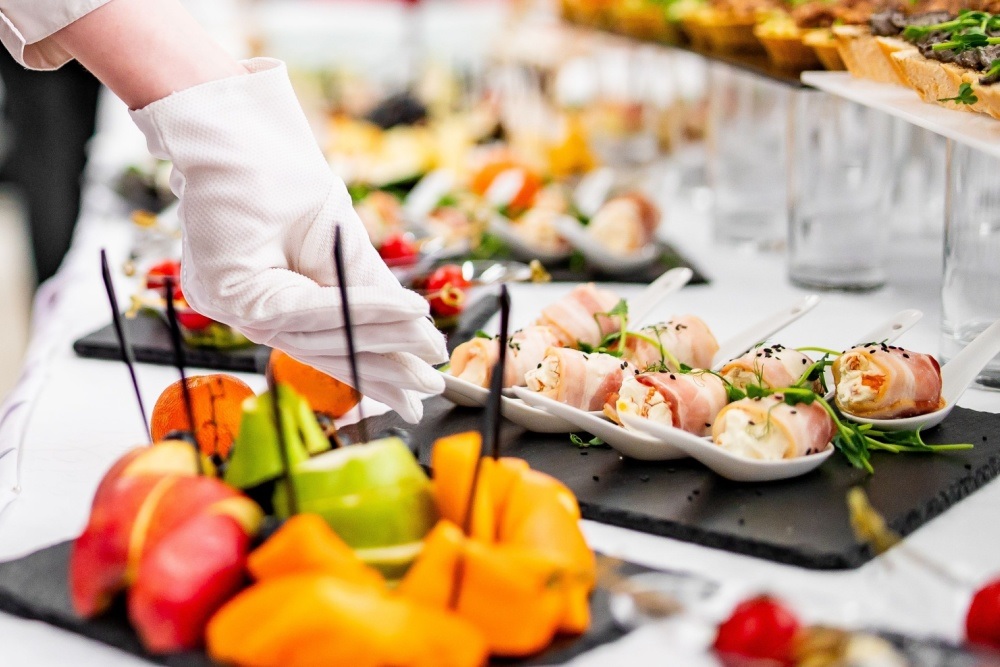
To maintain a high-energy, cocktail-driven atmosphere without leaving guests hungry, caterers are elevating the concept of passed hors d’oeuvres into substantial, roaming micro-courses. Waitstaff navigate the crowd carrying elegantly designed vessels containing heavily composed bites. These are not simple cheese skewers; they are miniature culinary masterpieces, such as a single perfectly seared scallop on a bed of sweet corn puree served in a ceramic spoon, or a tiny, two-bite braised short rib slider on a house-made brioche bun. By bringing the food directly to the guest while they are standing and conversing, the host maintains the vibrant, kinetic energy of the room for hours on end without sacrificing the culinary weight of a full meal.
The Late-Night Comfort Food Intervention
Event psychology dictates that a grand occasion requires a shifting narrative arc. What begins with elegance and high-end sophistication must eventually transition into unpretentious celebration. As midnight approaches, after hours of dancing, drinking, or intense corporate networking, guests experience a natural dip in energy. The most successful modern events combat this fatigue through a strategic late-night culinary deployment.
Right as the energy begins to wane, the catering team executes a sharp pivot, bringing out highly recognizable, elevated comfort food. The arrival of a late-night wood-fired pizza cart, trays of gourmet truffle grilled cheese sandwiches, adult milkshakes, or a customized taco stand acts as a massive psychological second wind for the crowd. It is a highly anticipated surprise that signals the formal portion of the evening has concluded and the pure celebration has begun.
The catering landscape has evolved from a rigid operational necessity into a highly dynamic, empathetic art form. By prioritizing radical dietary inclusivity, embracing live culinary theater, respecting local agricultural ecosystems, and executing flawless service from the first cocktail to the late-night snack, modern caterers are doing far more than feeding a crowd. They are engineering the very architecture of hospitality, ensuring that the culinary experience serves as the unforgettable heartbeat of the event.

Comments are closed.