

The culinary program is the undisputed anchor of any successful event. Long after the floral arrangements have wilted and the venue’s architecture has faded from memory, guests will vividly recall the quality, presentation, and abundance of the food they were served. However, designing a menu is not a universal process. The logistical choreography required to feed an intimate dinner party of twelve is fundamentally different from the military precision needed to execute a plated dinner for five hundred corporate executives.
Approaching catering requires a strategic mindset that balances aesthetic ambition with physical reality. The goal is to perfectly match the style of food service to the specific rhythm and demographic of the gathering. By understanding how culinary mechanics shift across different scales of entertaining, hosts can curate environments that foster genuine connection, maintain a high-energy atmosphere, and deliver an unforgettable hospitality experience.
Intimate Gatherings and Micro-Events (10 to 30 Guests)
When the guest list is highly curated, the catering should pivot away from sheer volume and focus entirely on hyper-personalization and premium ingredients. In a small setting, every detail is magnified. Guests have the time to appreciate the nuances of the plating, the origin of the ingredients, and the narrative behind the menu.
The Interactive Chef Experience
For dinner parties, executive retreats, or micro-weddings, removing the barrier between the kitchen and the dining room creates an incredibly memorable evening. Hiring a private chef to prepare a multi-course tasting menu right in front of the guests transforms the meal into a piece of interactive theater. The chef can introduce each course, explain the sourcing of a specific dry-aged Wagyu beef, or demonstrate the technique used to create a delicate foam. This format demands a highly adventurous menu, often featuring six to eight small, intricately composed plates paired meticulously with specific regional wines.
Elevated Family-Style Dining
If the goal is to foster deep conversation and warmth, premium family-style dining is the optimal choice. Unlike the cafeteria feel of a buffet, family-style service involves bringing large, beautifully garnished platters directly to the center of the table. Guests pass a whole roasted branzino, massive bowls of heirloom tomato and burrata salad, and perfectly charred root vegetables to one another. The physical act of sharing food naturally breaks down social barriers and forces interaction, making it the perfect format for bringing disparate friend groups or new corporate teams together in a relaxed yet highly elegant environment.
Mid-Sized Celebrations and Corporate Retreats (50 to 150 Guests)
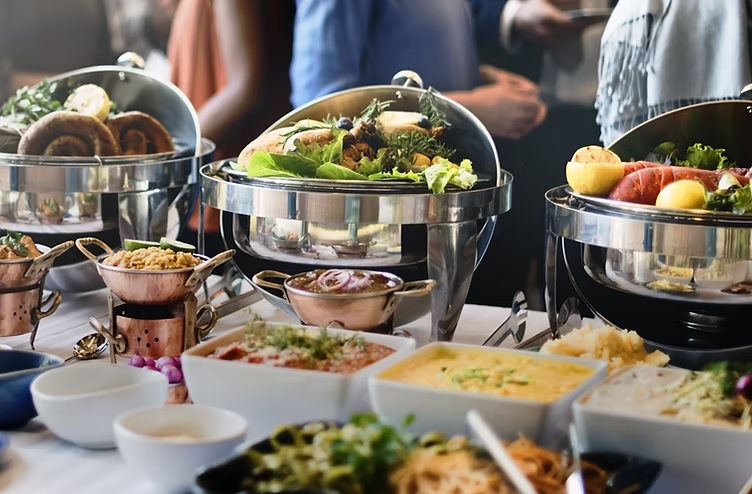
As the guest count expands, hosts face a dangerous logistical trap: the traditional chafing-dish buffet. While cost-effective, a standard linear buffet inherently causes massive traffic bottlenecks, leaves guests standing in unappealing lines, and often results in lukewarm food that has been sitting over sterno fuel for an hour. Mid-sized events require catering strategies that distribute the crowd while maintaining a high standard of culinary freshness.
Thematic Action Stations
The most effective way to manage a mid-sized crowd is to break the room up using diverse food stations. Rather than forcing one hundred people to walk down a single line, you scatter culinary destinations throughout the venue. Action stations are particularly effective because they involve a chef preparing or finishing a dish to order, completely eliminating the issue of stale food.
A fresh raw bar featuring a shucker opening oysters on demand, a customized risotto wheel where pasta is tossed inside a massive hollowed-out wheel of Parmigiano-Reggiano, or a high-end taco stand pressing fresh masa tortillas all create natural gathering points. This layout encourages guests to constantly move, mingle, and explore the room rather than sitting passively at a designated table for the entire evening.
The Evolution of the Roaming Cocktail Hour
For networking events or celebratory parties where you want to maintain a high-energy, cocktail-driven atmosphere, consider abandoning the seated dinner entirely. Instead, deploy a heavy, continuous rotation of passed hors d’oeuvres. To replace a full meal, these cannot simply be light bites; they must be substantial. Think miniature lobster rolls on brioche, braised short rib sliders, lamb lollipops with mint chimichurri, and elegant soup shooters. By keeping the food moving through the crowd on silver trays, you keep the guests on their feet, interacting, and holding a drink, which sustains the vibrant energy of the room for hours.
Grand Occasions and Massive Galas (200+ Guests)
When an event scales into the hundreds or thousands, culinary ambition must bow to logistical reality. You can no longer rely on delicate, temperature-sensitive dishes. The catering operation becomes an exercise in mass synchronization, requiring dozens of servers, massive mobile kitchens, and a menu designed specifically for flawless, rapid execution.
Precision Plated Service
For grand charity galas and massive weddings, the plated dinner remains the gold standard of formal hospitality. The secret to success at this scale lies in menu selection. You must choose proteins that hold their heat and moisture exceptionally well under a warming dome. A delicate, flaky white fish will inevitably dry out when plated for four hundred people, but a slow-braised beef short rib or a confit chicken thigh will remain incredibly tender and flavorful even if the speeches run twenty minutes over schedule.
Furthermore, the service itself must be orchestrated perfectly. Synchronized service, where a team of waiters surrounds a table and drops every plate simultaneously, provides a stunning visual impact that signals absolute premium luxury to the attendees.
The Late-Night Culinary Shift
A grand occasion typically spans several hours, inevitably leading to a dip in energy as midnight approaches. The most successful modern galas and massive weddings combat this fatigue by introducing a completely separate late-night catering deployment. Right as the dance floor peaks or the corporate after-party begins, servers emerge with highly recognizable, elevated comfort food. Wood-fired pizzas, gourmet grilled cheese sandwiches with truffle fries, or even a branded food truck pulling up to the venue patio act as a psychological second wind for the guests, ensuring the event ends on a massive high note rather than slowly fading away.
Universal Catering Considerations for the Modern Host
Regardless of whether you are feeding ten people or a thousand, certain hospitality principles apply universally across the modern event landscape.
Navigating Dietary Restrictions with Elegance
It is an absolute certainty that any modern guest list will include individuals with strict dietary requirements, including vegan, gluten-free, and severe nut allergies. Historically, these guests were treated as logistical burdens, often handed a generic plate of unseasoned steamed vegetables while everyone else enjoyed steak.
Today, premium hospitality demands inclusively designed menus. The vegetarian or gluten-free alternative must be constructed with the exact same level of culinary ambition as the primary dish. A wild mushroom and truffle risotto or a roasted cauliflower steak with a complex romesco sauce ensures that guests with dietary restrictions feel valued and catered to, rather than ostracized as an afterthought.
The Aesthetics of Presentation and Flow
Finally, it is essential to remember that people eat with their eyes first. The physical presentation of the food must align seamlessly with the aesthetic of the event. Utilizing varying heights and verticality in food displays creates visual drama and makes stations look abundant. Furthermore, the strategic placement of bars and food stations dictates the physical flow of human traffic. Always place the most popular items—like the primary bar or the carving station—at the furthest corners of the room to naturally pull guests into the space and prevent massive bottlenecks at the entrance.
Selecting the right catering strategy is the ultimate expression of care for your guests. By anticipating the logistical demands of your crowd size, focusing heavily on the aesthetics of service, and prioritizing culinary quality over sheer volume, you elevate your event from a simple gathering into a truly defining hospitality experience.

Comments are closed.